NTNU Trondheim · Autonomous Surface Vessel Team

Student‑built. Self‑stabilising. Fully autonomous.

Ligmax is a student team from the NTNU Department of Electronic Systems building a roll- and pitch-stabilised autonomous trimaran — hull, power, electronics, perception and autonomy, all of it our own work.

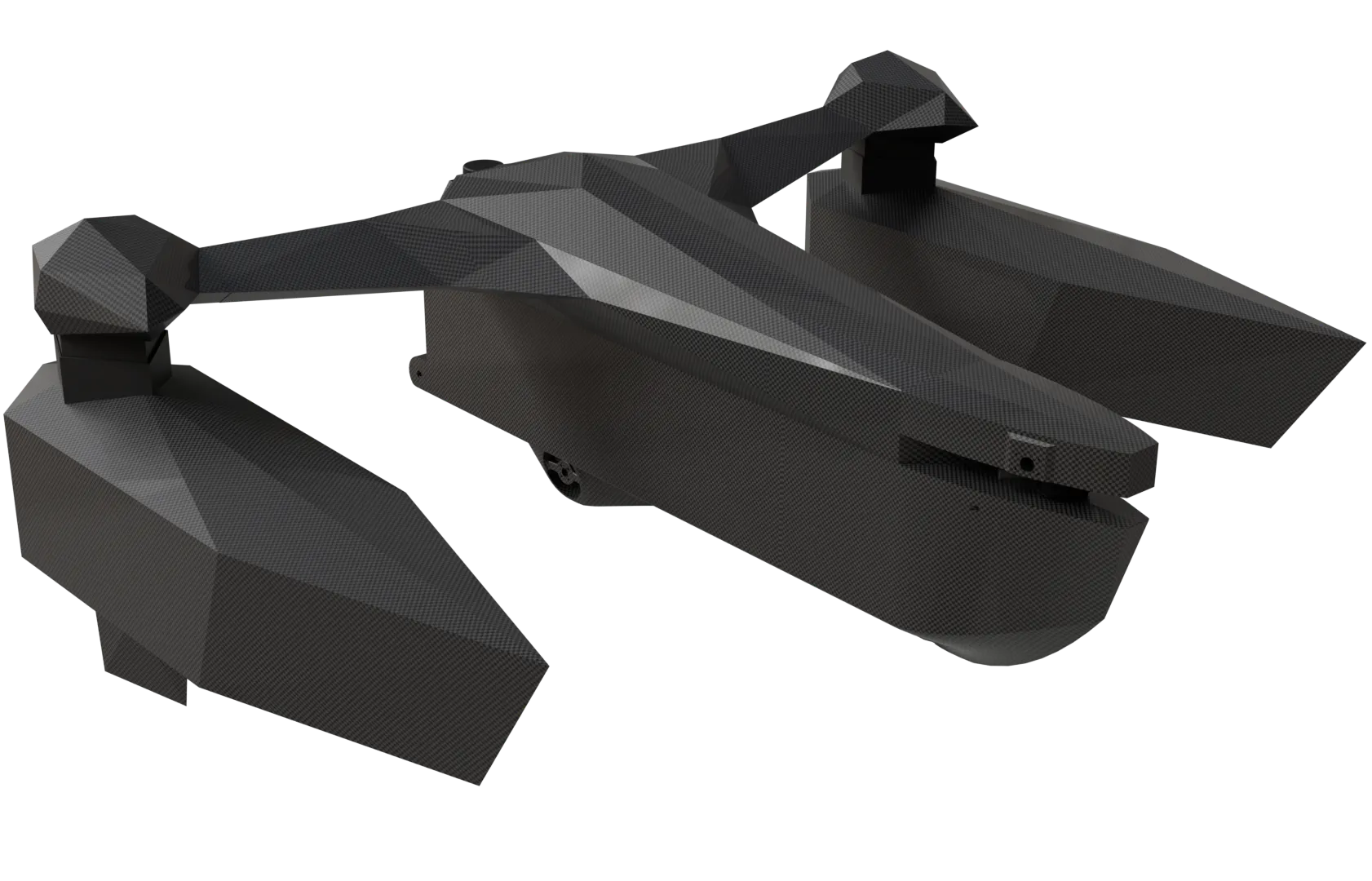
Render of the Ligmax trimaran: a carbon-fibre main hull flanked by two outriggers on retractable arms
Combined thrust
≈5 kW
Li-ion energy store
1.8 kWh
Lidar coverage
360°
Actively stabilised
3 hulls
On the water

See the boat work

Ligmax under way on open water, running straight and level under its own power. Everything below — the trim loops, the sensor stack, the ground station — exists to make this look uneventful.

Who we are

A multidisciplinary engineering team from NTNU

Ligmax is the autonomous surface vessel built by Dialga, a student engineering organisation at NTNU that takes autonomous machines from mechanical design to firmware. Ligmax was Dialga’s 2026 project; Mobula, due in 2027, is next. The team brings together students from the bachelor’s and master’s programmes at the NTNU Department of Electronic Systems (Elsys) in Trondheim, Norway. With a strong track record of delivering large-scale technical projects together, we design, build and operate every part of our vessel ourselves: hull, power systems, electronics, perception and autonomy software.

The vessel is the long project; competitions are checkpoints along it. Njord, the Autonomous Ship Challenge, was the first one we entered, and it gave us a week of hard data on what holds up in salt water. Ligmax intends to keep developing the platform and to compete in further national and international autonomy challenges.

The vessel

A stabilised trimaran, engineered end to end

A slender central hull carries propulsion, power and compute, while two outriggers provide a wide, stable stance. A sliding battery, active outriggers and a gimbal-stabilised lidar form three coordinated control loops that counteract wave motion, keeping the sensor package level for clean perception data and efficient planing.

Explore every part in 3D

Technical specifications

Configuration
Roll- and pitch-stabilised trimaran
Dimensions (L × B × H)
1126 × 1252 × 478 mm
Structure
3D-printed PLA, carbon-fibre and epoxy skin
Propulsion
2× 2.5 kW brushless thrusters + lateral stern thruster
Steering
Differential thrust, no rudder
Stabilisation
Sliding-battery pitch trim · active outriggers · gimballed lidar
Energy
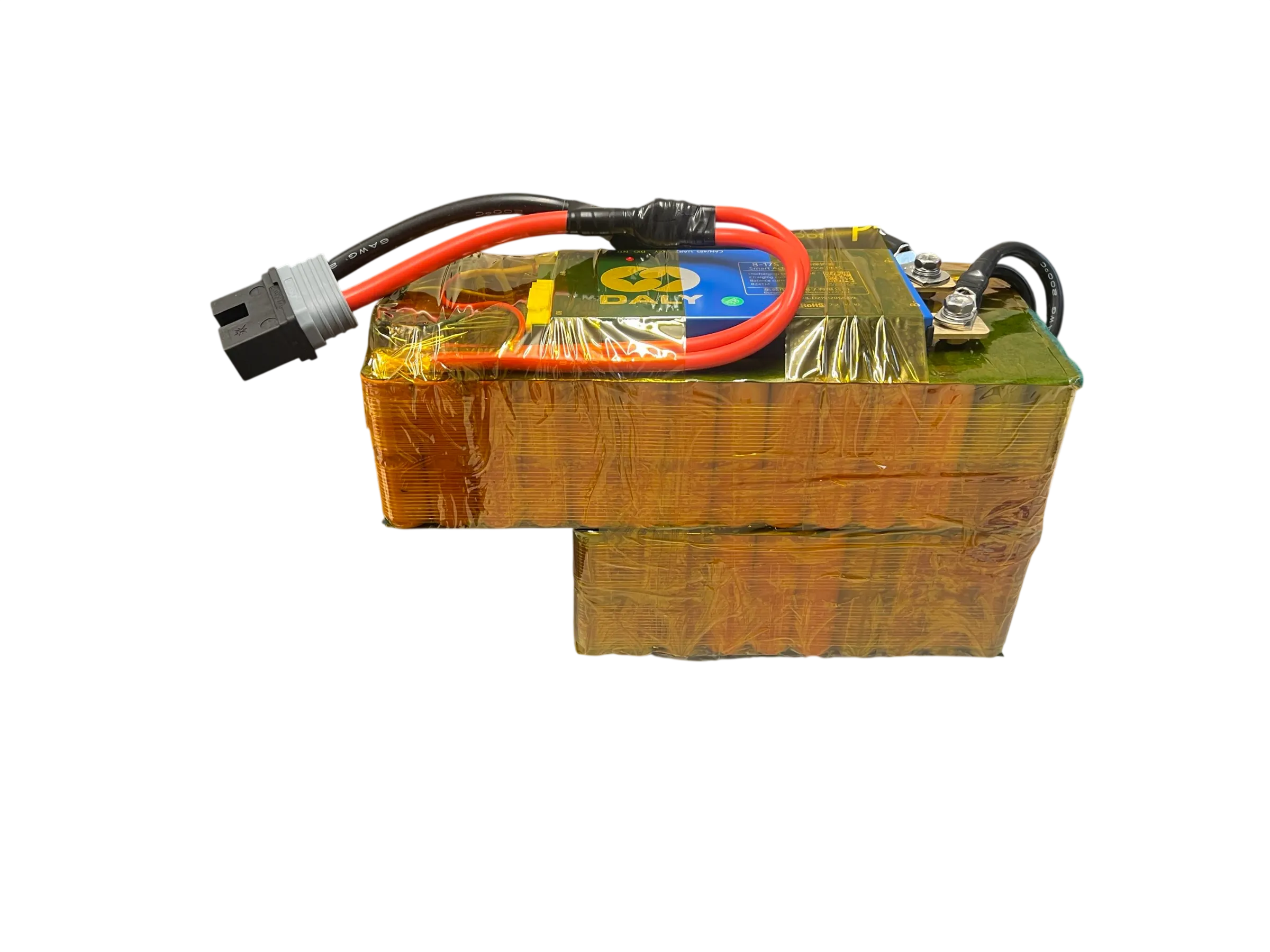
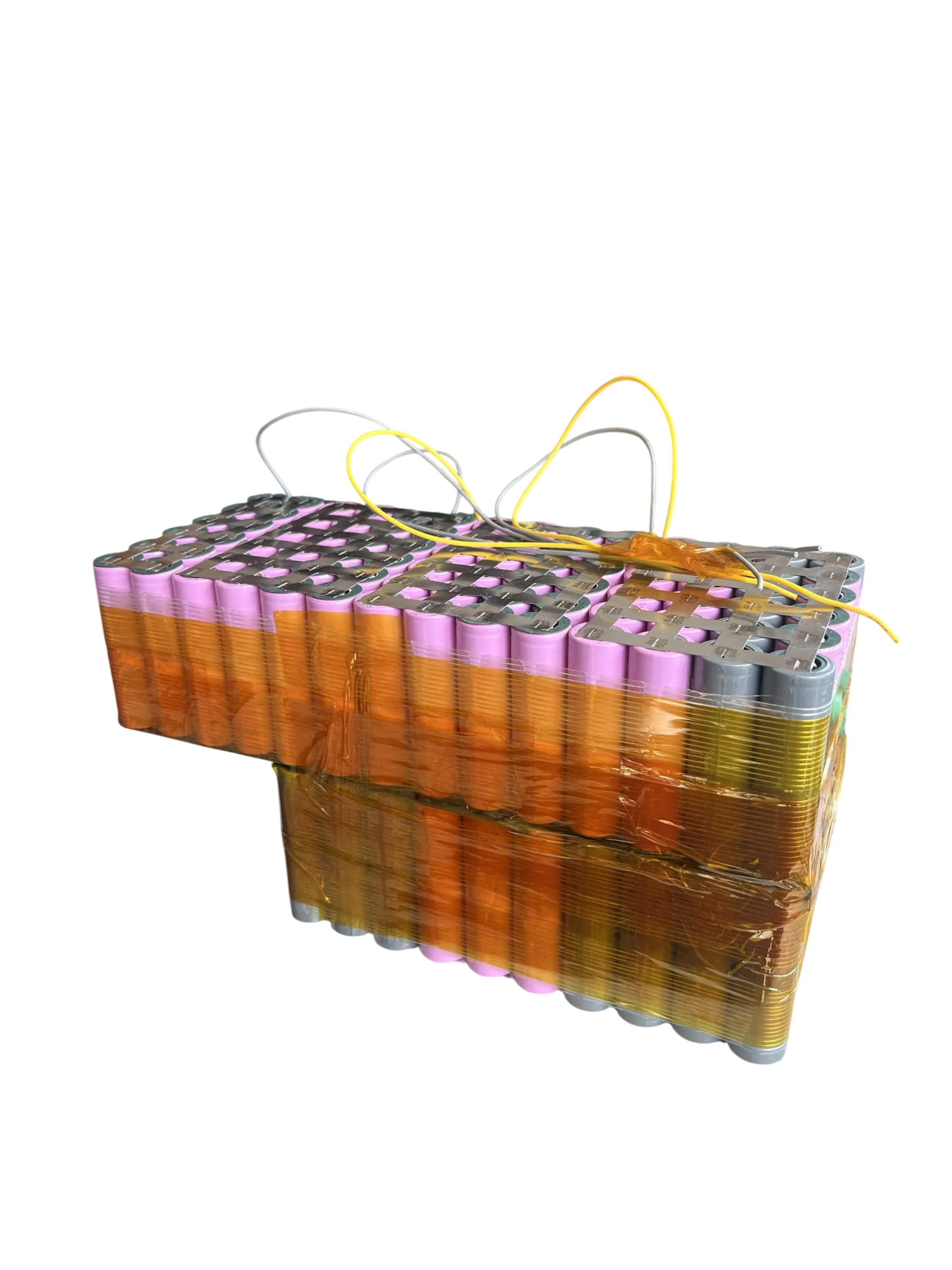
12S12P Li-ion pack, 44.4 V · 1.8 kWh, 150 A BMS
Sensing
2× 360° lidar, 2× 220° cameras, sonar, GNSS/compass, IMUs
Compute
NVIDIA Jetson Orin Nano Super · Raspberry Pi 5 · Pixhawk 6C
Communications
Direct low-latency 5G link + long-range RC fallback
Read the full technical report (PDF)
Technology

Attacking instability at the source

Most student vessels accept wave motion and try to clean up the data in software. Ligmax handles it mechanically instead, with four control loops running on live sensor feedback: three that hold the boat and its sensors level, and one that sets how deep it rides.

  • 01

    Pitch

    The 1.8 kWh battery slides fore and aft on rails, shifting the centre of mass.

  • 02

    Roll

    Linear actuators in the outriggers adjust the righting moment in real time.

  • 03

    Ride height

    Driving both outriggers the same way lifts the main hull higher or lets it settle.

  • 04

    Sensors

    A custom-built gimbal holds the front lidar level through any residual motion.

The pitch loop on the bench — the battery running fore and aft on its rails.
Stabilisation · Loop 01

Pitch trim by weight shift

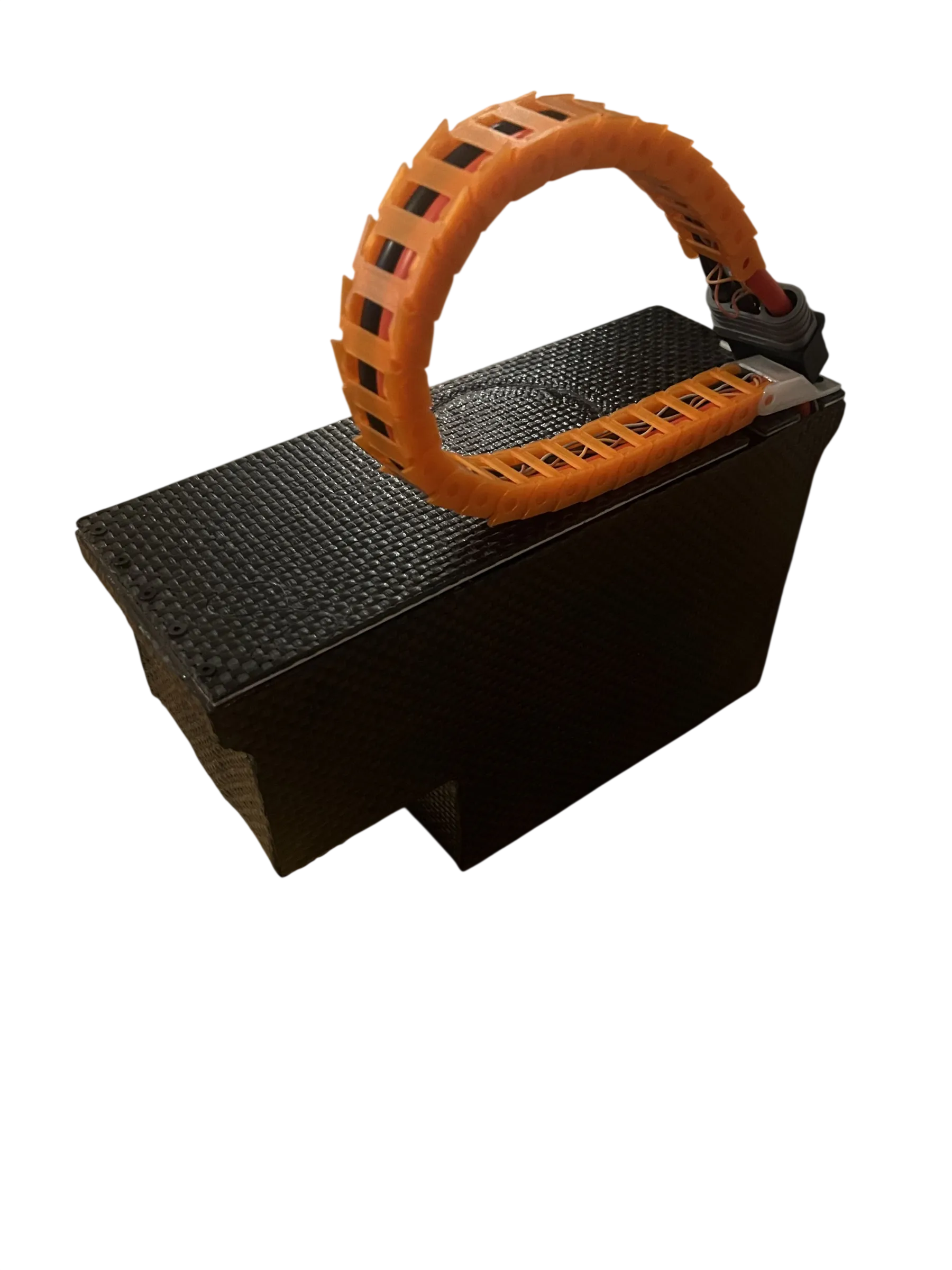
Instead of relying on hull shape alone, Ligmax keeps itself level mechanically. The 1.8 kWh battery, the heaviest component on board, slides fore and aft on linear rails, driven by a dual-shaft stepper and belt, moving the centre of mass to trim pitch.

The battery does double duty as energy store and trim mass, so the stabilisation costs almost no extra weight. The pack is notched at its forward bottom corner so it can run all the way to the front stop with part of itself sitting over the drive motor, buying travel a plain rectangular block would give up. Trimming the vessel to the right attitude to plane also cuts wetted area and drag at speed.
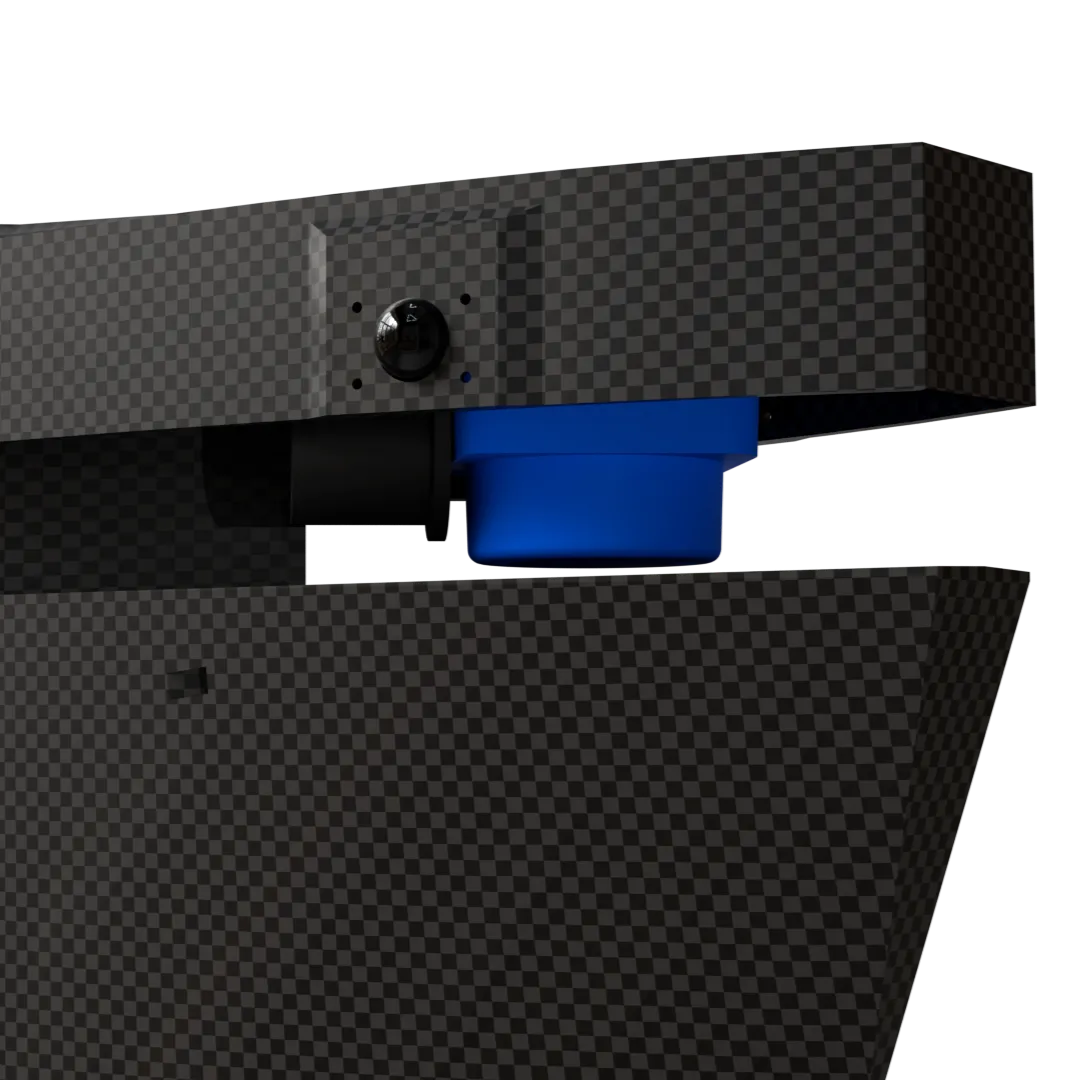
The roll loop on the bench — the amas driving up and down against roll.
Stabilisation · Loop 02

Roll trim by active outriggers

Linear actuators shift the outriggers vertically, adjusting the righting moment and the immersion of the main hull to counter roll, augmenting the passive stability of the wide trimaran stance with active control.

The result is a vessel that stays composed in wake and chop, exactly when precision matters most: docking, station-keeping and threading a buoy channel.

Ride height being set while under way — both amas driving the same direction together.
Stabilisation · Loop 03

Ride height, set on the water

The outriggers that fight roll also decide how deep the boat sits. Driving both actuators the same way, instead of against each other, presses the amas down and lifts the main hull clear of the water, or lets it settle back in. It is a separate axis of control sharing the same hardware as the roll loop.

Ride height is set live while under way, so the vessel can be trimmed to the water it is actually on rather than to a compromise picked on shore: higher to cut wetted area and drag on a clear run, lower for a wider, steadier stance when the water is confused or when precision matters more than speed.

Stabilisation · Loop 04

A custom gimbal for the front lidar

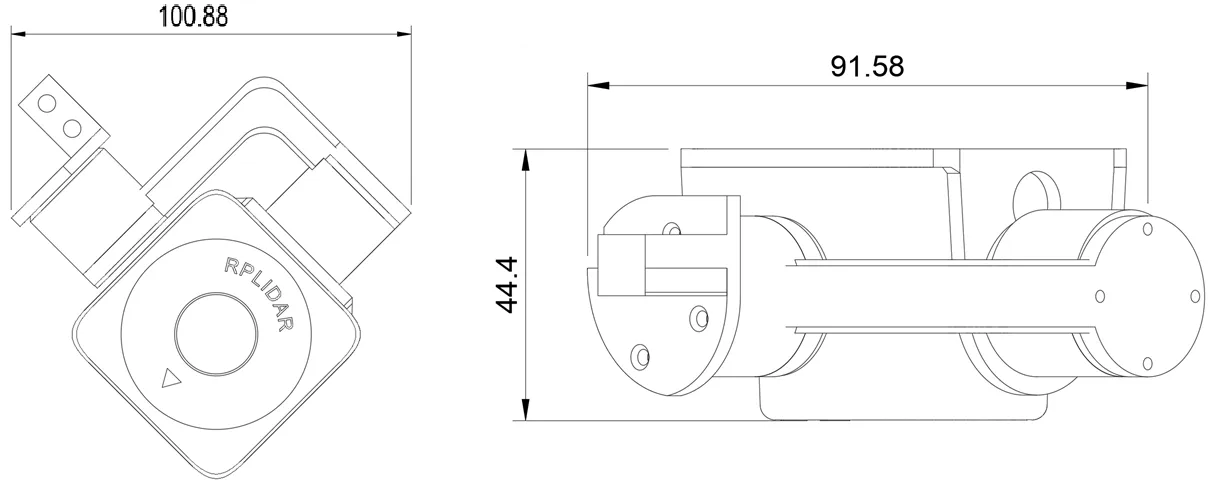
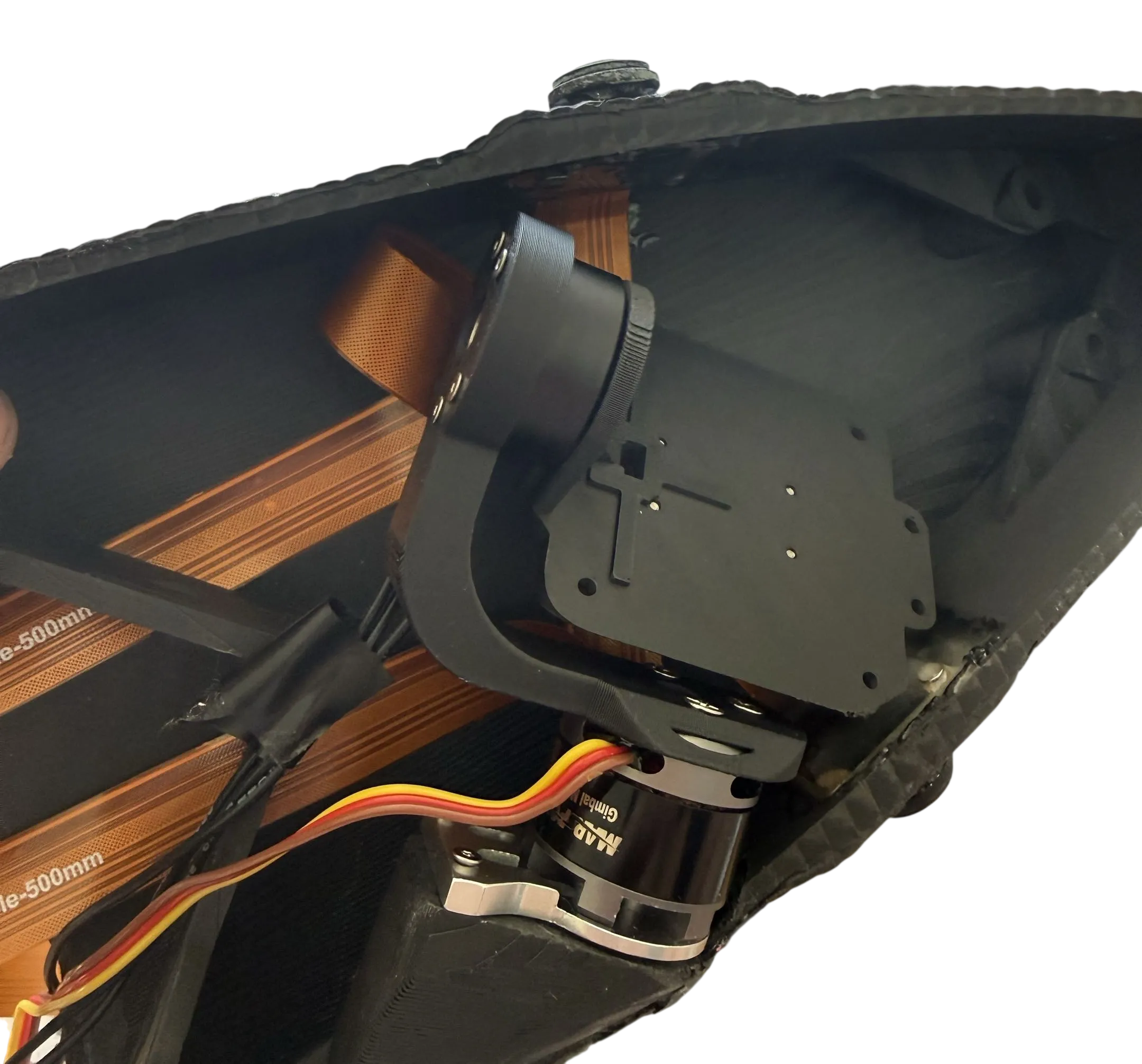
The third loop guards perception directly. The front 360° lidar rides on a compact gimbal designed and built in-house, just over 100 mm across, with its own dedicated IMU for fast, local correction. Whatever pitch and roll remain after the hull-level loops, the gimbal cancels, holding the scan plane horizontal at all times.

A 2D lidar sees a single slice of the world, so that slice has to be the right one. Keeping it level means buoys stay in view scan after scan instead of vanishing as the bow lifts. That recovers the robustness of a far heavier, more expensive 3D sensor rig from an inexpensive 2D unit.

Sensing & autonomy

Object detection, straight from geometry

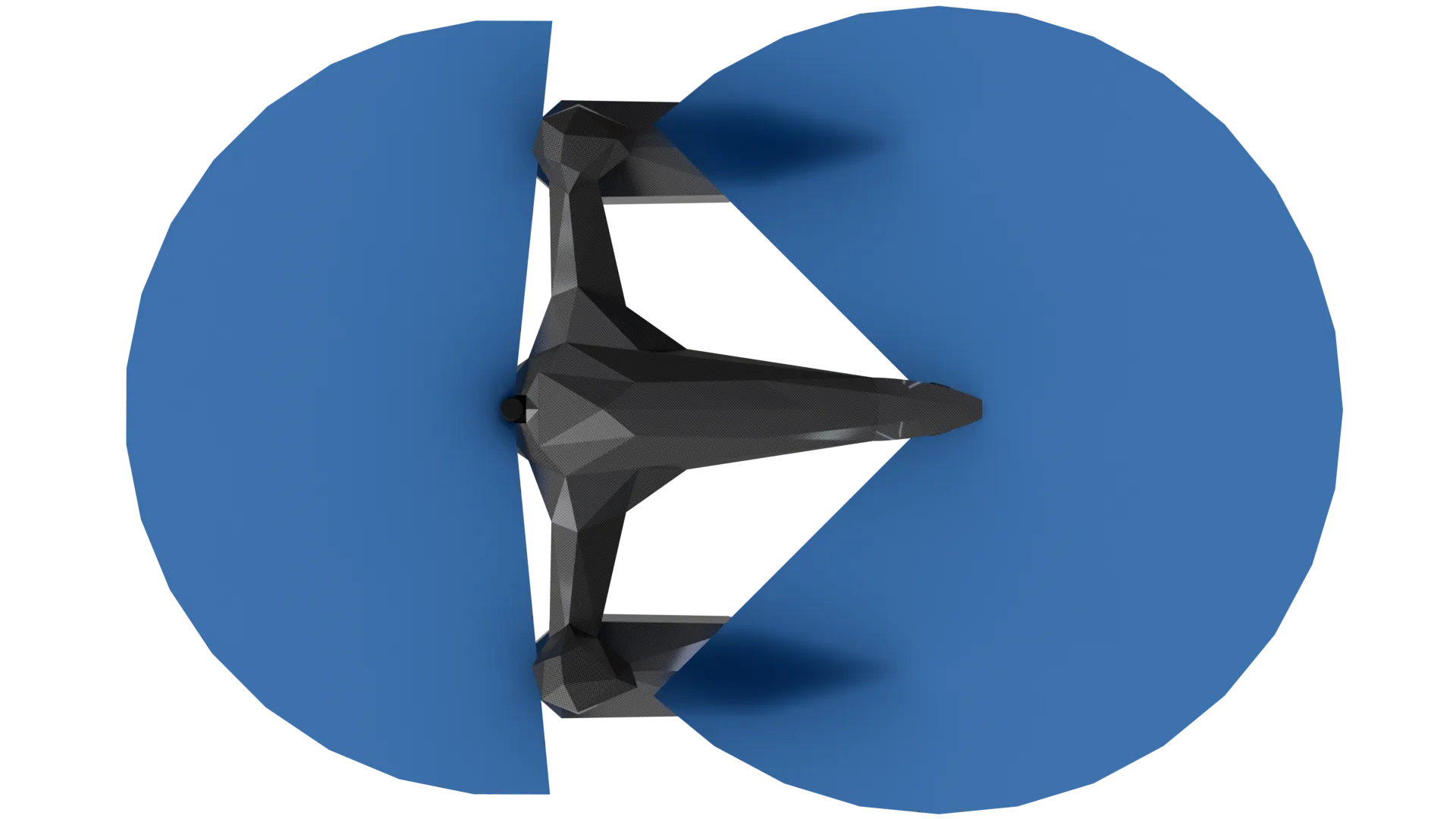
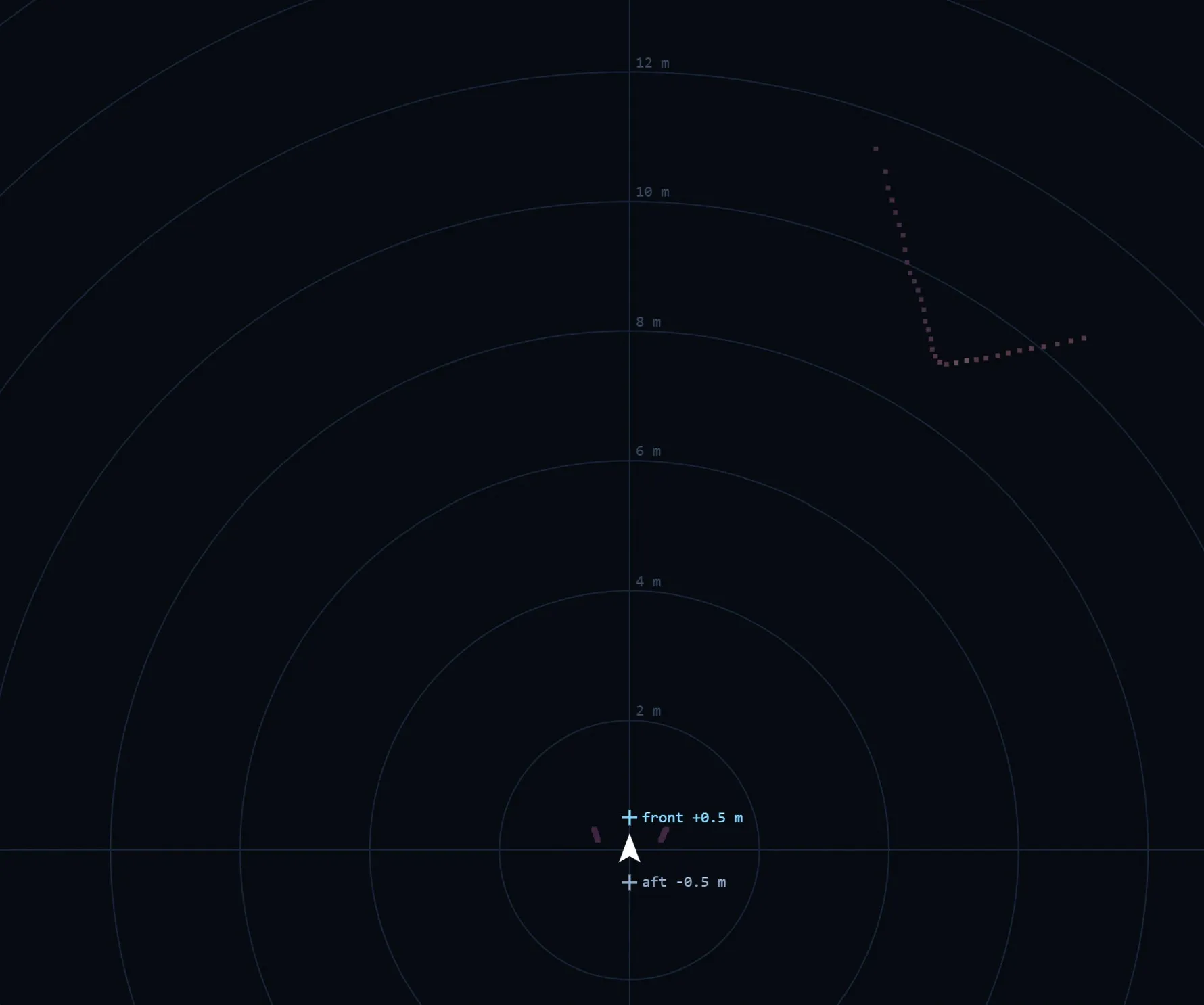
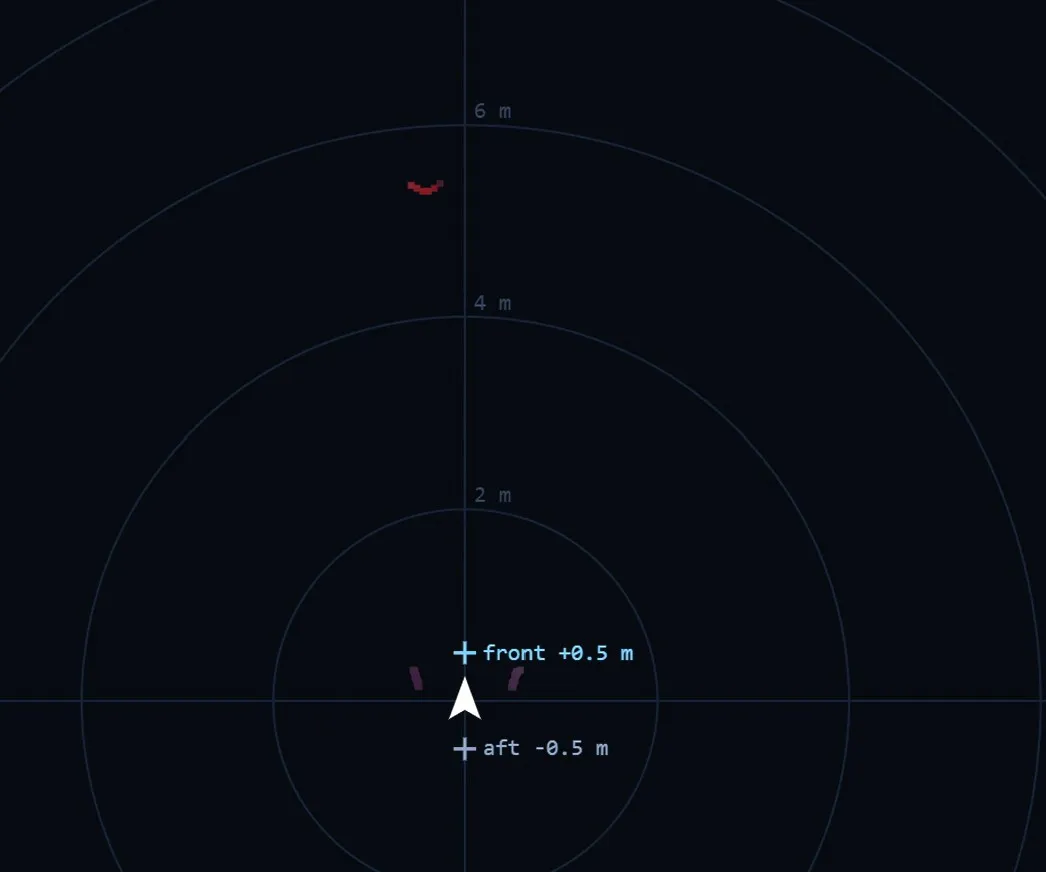
Two 360° lidars, one gimbal-stabilised at the bow and one aft, give continuous range data on every bearing. A deterministic Euclidean clustering algorithm groups the scan returns into candidate objects, each with a range, bearing and size: fast, explainable detection with no training data required.

Deterministic geometry is the backbone of a safety-critical vehicle: every detection can be traced back to the exact points that produced it.

Sensing & autonomy

Cameras add what lidar cannot: colour

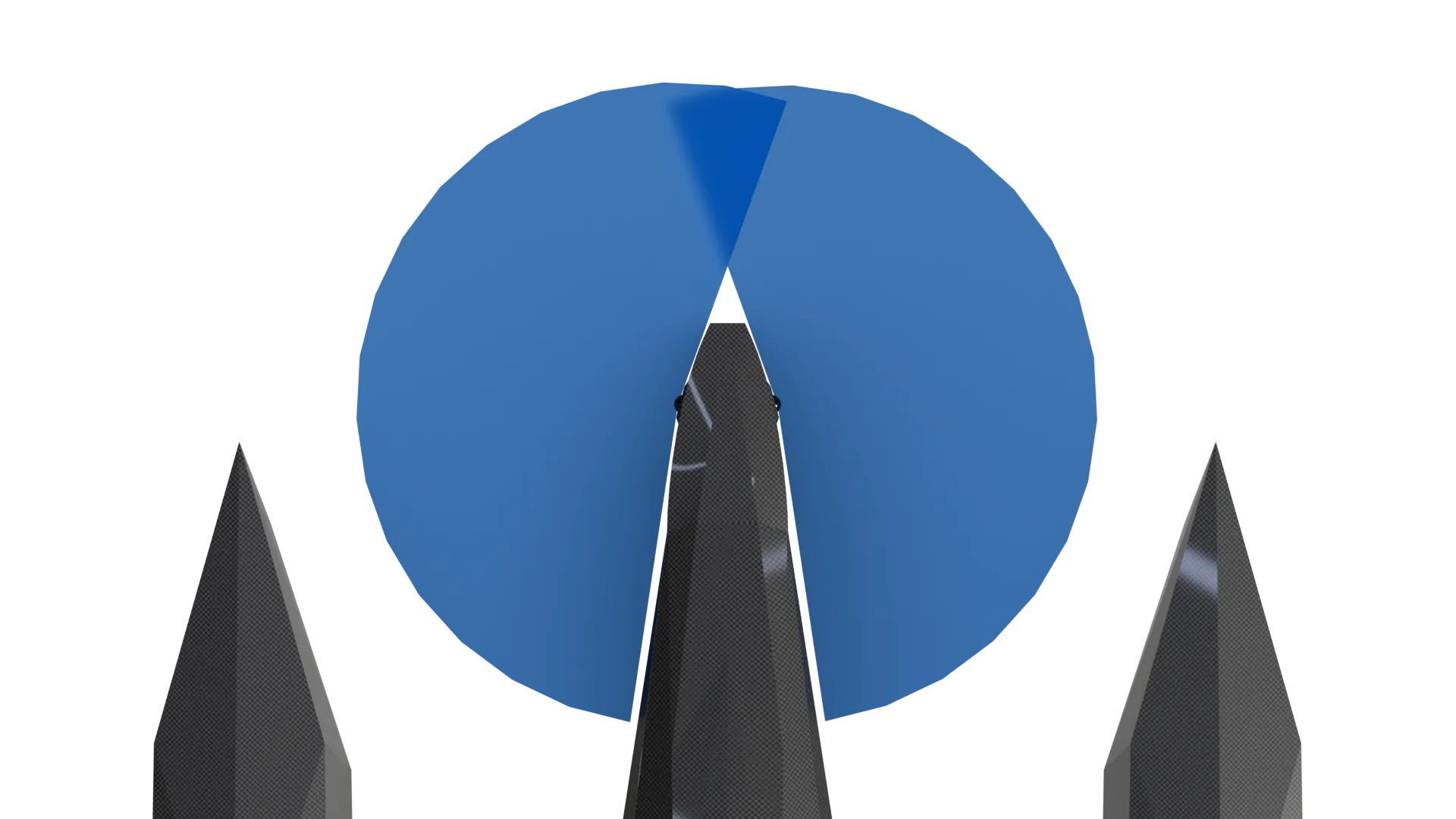
Lidar is colour-blind, and the course is not: channel buoys are red and green. Two 220° wide-angle cameras cover the whole forward arc, and a probabilistic classifier projects each lidar detection into the camera frame and samples its colour, labelling objects without a single neural weight.

As a fallback and cross-check, a YOLO26L detection network runs on dedicated vision hardware, an NVIDIA Jetson Orin Nano Super, finding buoys directly in the image even in difficult light. Geometry from lidar, colour from camera, verified by the network.

The console on the first-run data from Njord: what the boat is doing, where it is, and the reason behind every call it makes.
Operations

A ground station built for zero hesitation

The operator console is custom software, matured on the team’s earlier 5G-controlled UGV project. A UDP hole-punched connection runs directly between vessel and laptop over 5G, with no relay or cloud in between, for the lowest latency physically achievable. It carries live camera feeds, the lidar world model and full telemetry.

Picking up a game controller takes over manual control instantly, with no menus in between, and a lightweight web dashboard gives judges and team an at-a-glance view. Kill and hold commands are always one action away, mirrored on an independent long-range RC link in case 5G drops.

Engineering for the water

Resilient systems & safety

Safety-critical control is deliberately separated from autonomy: a Pixhawk 6C flight controller owns hard-real-time control and failsafes, while a Raspberry Pi 5 and an NVIDIA Jetson Orin Nano Super run planning and perception. All propulsion power routes through a physical emergency-stop safety loop.

The self-built battery lives in a fireproof aluminium-and-steel enclosure with full BMS telemetry, the hull seals with an interlocked powered lid, and three bilge pumps keep the vessel operational even after water ingress. A direct 5G link carries operator video and telemetry, with an independent long-range RC link as backup.

The build

Built from parts, not kits

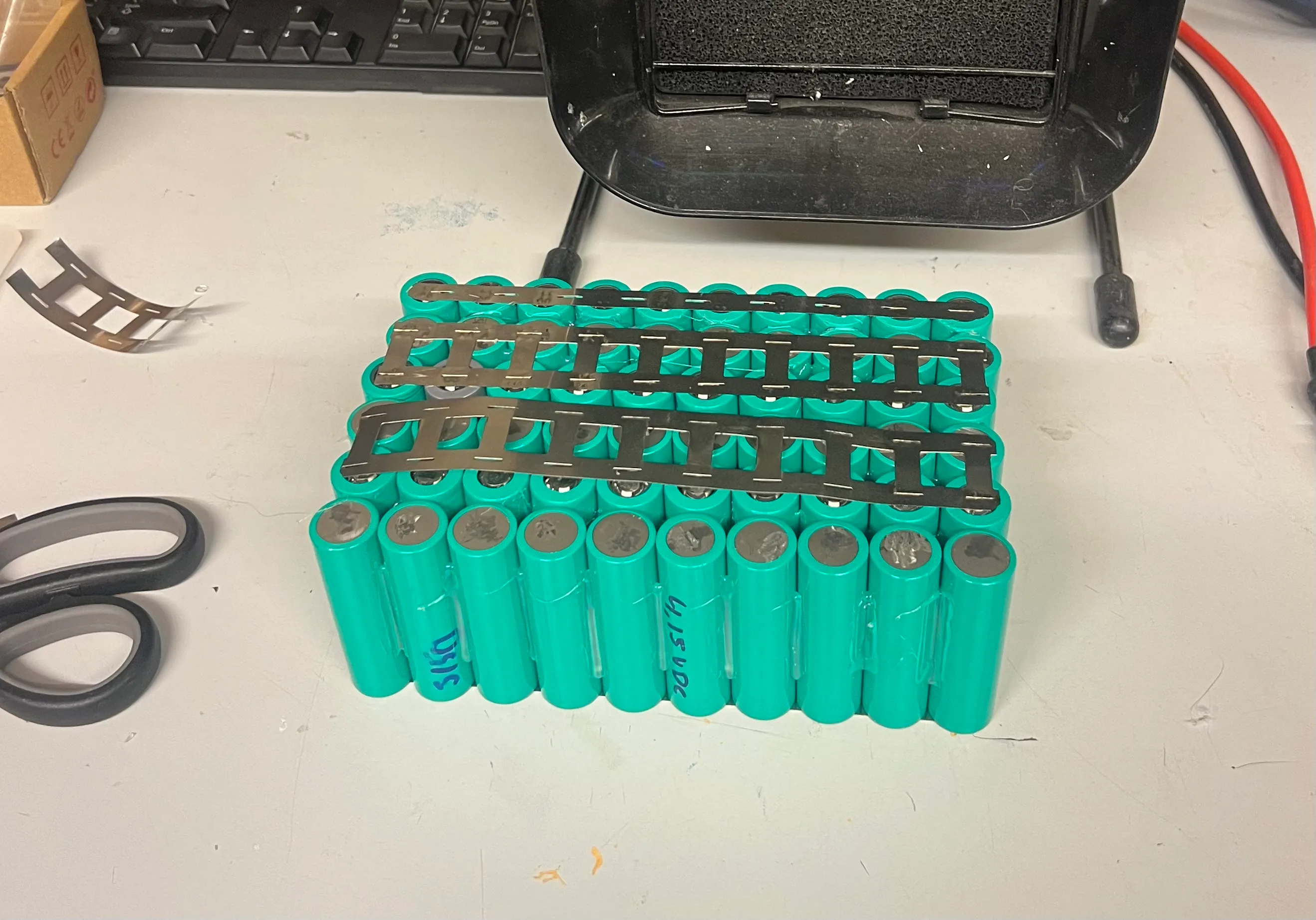
Ligmax is not an assembled product: it is 31 numbered line items turned into a vessel. The hull is 3D-printed in sections and hand-laminated in carbon fibre; the 144-cell battery pack is welded in-house and enclosed in its own fireproof box; rails, belts, actuators, drivers and compute are wired and integrated by the team.

See every component

Validated in the lab, then raced

Every subsystem was integrated and bench-tested before pool trials and full-course testing against real buoys in Trondheim and Oslo. The vessel then raced at Njord 2026, where a flooded hull on day one cost us the lidars and turned the week into a rebuild — the full account is here.

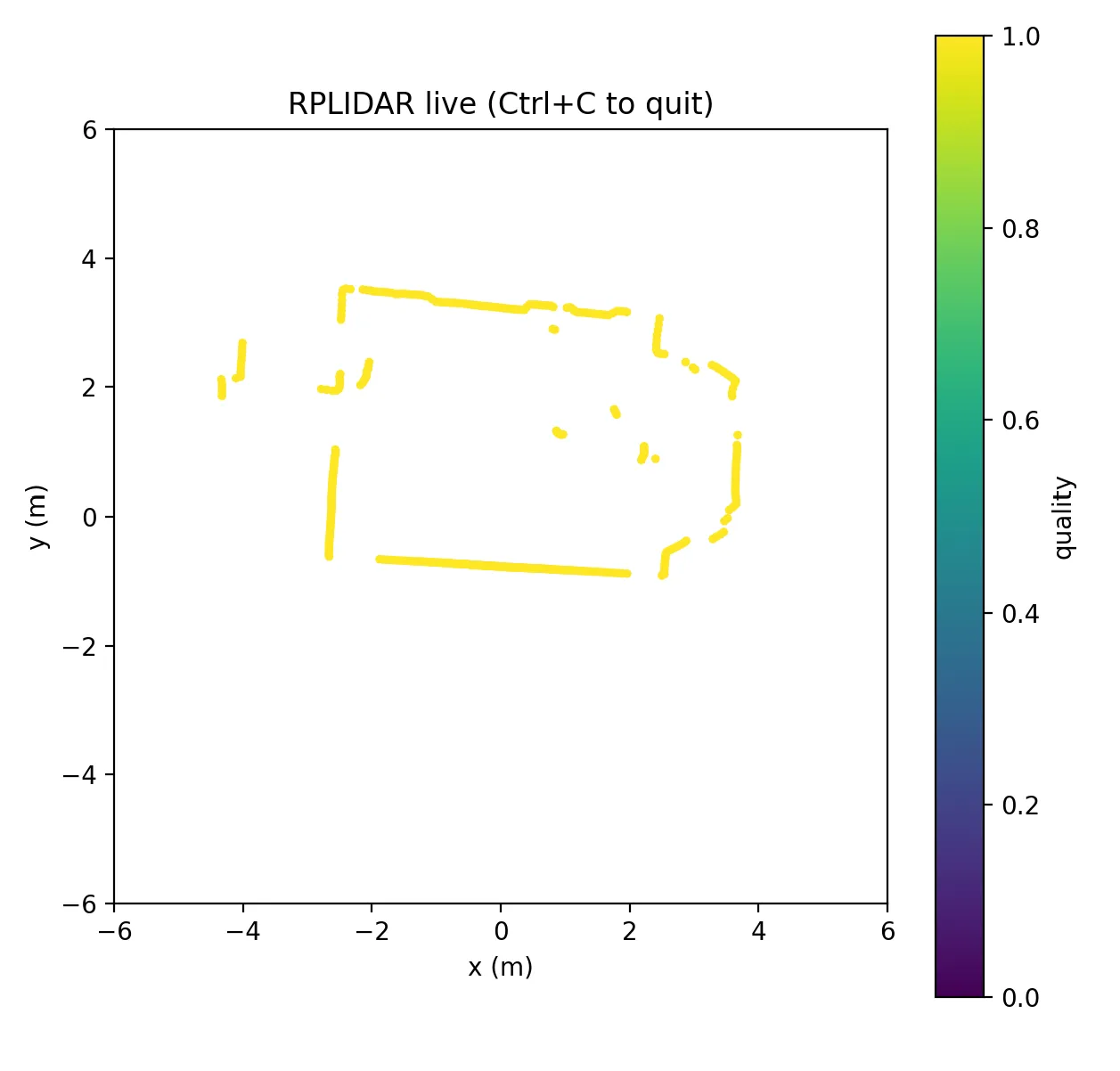
  • Live 2D lidar scan plotted during workshop testing
    Live lidar scan during workshop bench testing
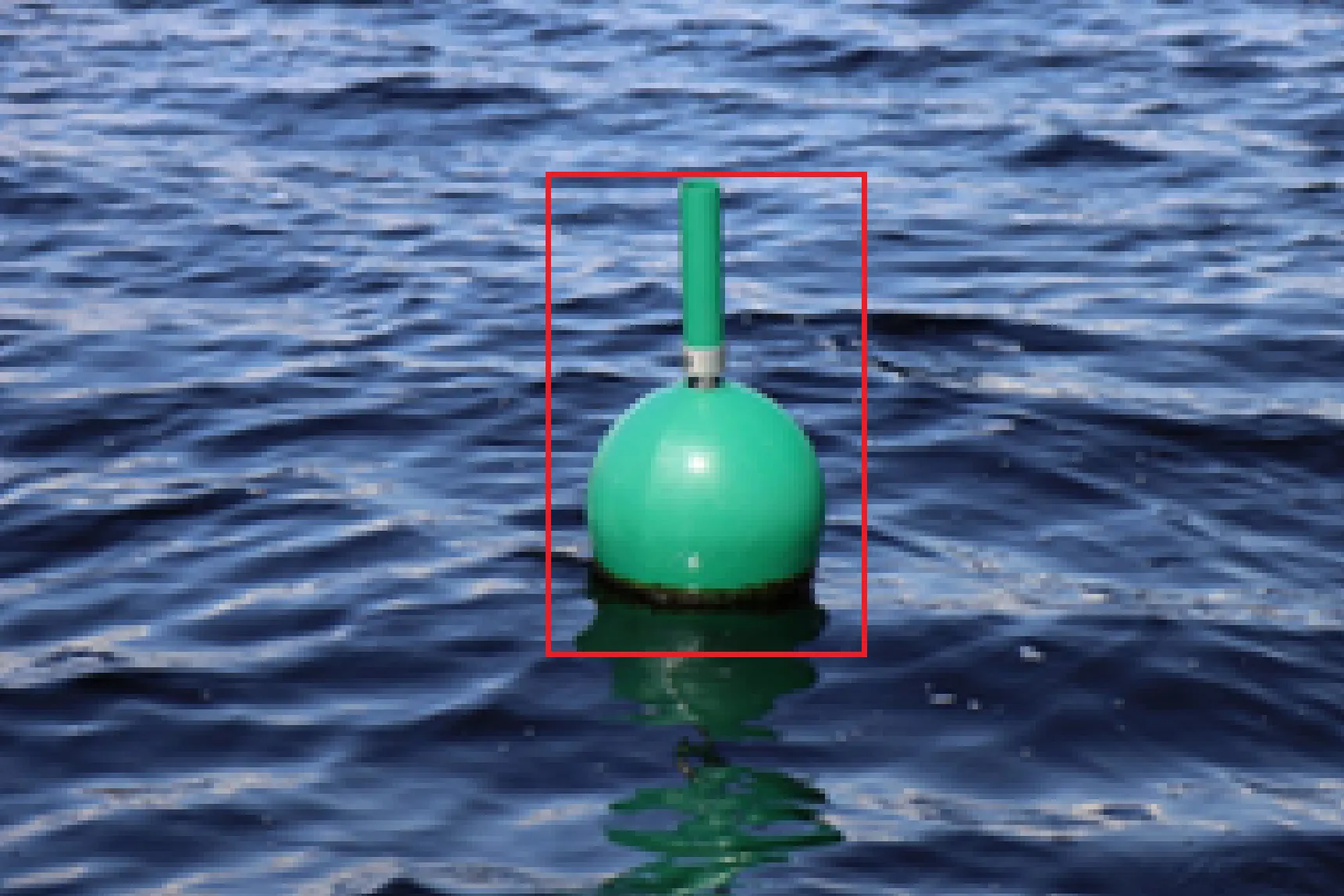
  • Camera image of a green buoy on open water with a detection bounding box
    CNN buoy detection validated on open water
  • Technical drawing of the custom front-lidar gimbal
    Custom front-lidar gimbal, designed in-house
One week of it · August 2026

We took it to Njord

Njord, the Autonomous Ship Challenge, is the international student competition for autonomous surface vessels, held on the Trondheimsfjord by students at NTNU. It was the first time we entered the boat in anything, and it was a rough week: the hull flooded during testing on day one, and we spent the rest of it rebuilding between runs. We finished fourteenth, and came home with a much better list of what to fix than a clean run would have given us.

The team

Jointly led, jointly built

Ligmax is led and engineered by its two members: NTNU students, highly capable across both software and hardware, who share responsibility for every subsystem from hull lamination to autonomy software.

Members listed in alphabetical order.

  • Portrait of Andreas Lindeman

    Andreas Lindeman

    Co-team lead

    NTNU student working across the full breadth of the project, from hull fabrication and power electronics to perception and autonomy software.

    andreaslindeman.com
  • Portrait of Jacob Hansson

    Jacob Hansson

    Co-team lead

    NTNU student equally at home in hardware and software, building everything from the drivetrain and battery systems to the control stack.