
Njord 2026 · Trondheim

A flooded boat, and a week spent rebuilding it

Njord was one week out of a project that has run far longer, and it was the week the hardware decided to fail. The boat went under on the first day of testing, and the damage kept surfacing until the last day. The tasks were never the hard part. This is what happened, and what the boat could still do once we had it back together.

The boat went under during testing

On our first day of testing the Pixhawk lost its settings. The main thrusters were no longer configured as bidirectional, so the moment we armed the boat they went to full reverse. The boat was pulled under, and everything on board went with it.

We saved it from sinking, but it came out full of water. We took every part out, cleaned all of it, and flushed everything with fresh water three times in a row to get the seawater out, with a lot of electronic cleaner on top. Most of it came back. The lidars did not — those were the one thing that died permanently that day.

That loss mattered more than any other. Both 360° lidars are what give Ligmax range data on every bearing, and the whole obstacle-detection chain — clustering scan returns into buoys, then colouring them from the cameras — starts there. The gimbal we built to hold the bow lidar level survived; the sensor it was built for did not.

Back on the water the next day

We went out the following morning and ran the opening round, roughly twenty-four hours after pulling a flooded boat out of the fjord. It scored fourth. Getting the boat to start at all was the part we were pleased with.

Then it came apart, one piece at a time

The cleaning bought us the opening round, but it did not stop what the seawater had started. Oxidation kept spreading, and components failed one after another for the rest of the competition, which is where the week ended up — fourteenth. The tasks themselves were not as hard as we had expected going in; we simply could not keep the hardware alive long enough to run them.

Rebuilt by the final day

We clawed it back part by part, and by the last day of the competition the boat was close to full function again. Only the lidars and the battery management system stayed dead. Every video below was filmed that day.
Final day · On the water

What it could still do

Filmed after the rebuild, running on the fjord without lidars or the BMS.

Setting ride height live 0:25

The amas driving up and down to set the height of the boat in the water, adjusted live while under way.

Amas retracting on water 0:04

A short look at the amas pulling back in while the boat is floating.

Final day · On the bench

The stabilisation system, moving

Ligmax trims itself on two axes: the amas drive up and down against roll, and the battery slides fore and aft against pitch. On the bench you can watch both react to the hull being tipped by hand.

Roll axis only 0:14

The amas alone, driving up and down to fight roll.

Pitch axis only 0:07

The battery alone, sliding forward and back along its rails to trim pitch.

Battery travel, end to end 0:13

The battery running from full forward to full aft and back again, showing the complete range of the pitch-trim slider.

Ama travel, end to end 0:16

Both amas extending and retracting through their full stroke on the bench.

Aftermath

Still emptying it out

Water stayed in the boat long after the day it went under. This is us draining the NEMA enclosure in the bottom of the bow — one of the places seawater sat and kept working on the electronics all week.

Draining the bow NEMA 0:03

Emptying the NEMA enclosure at the bottom front of the boat.

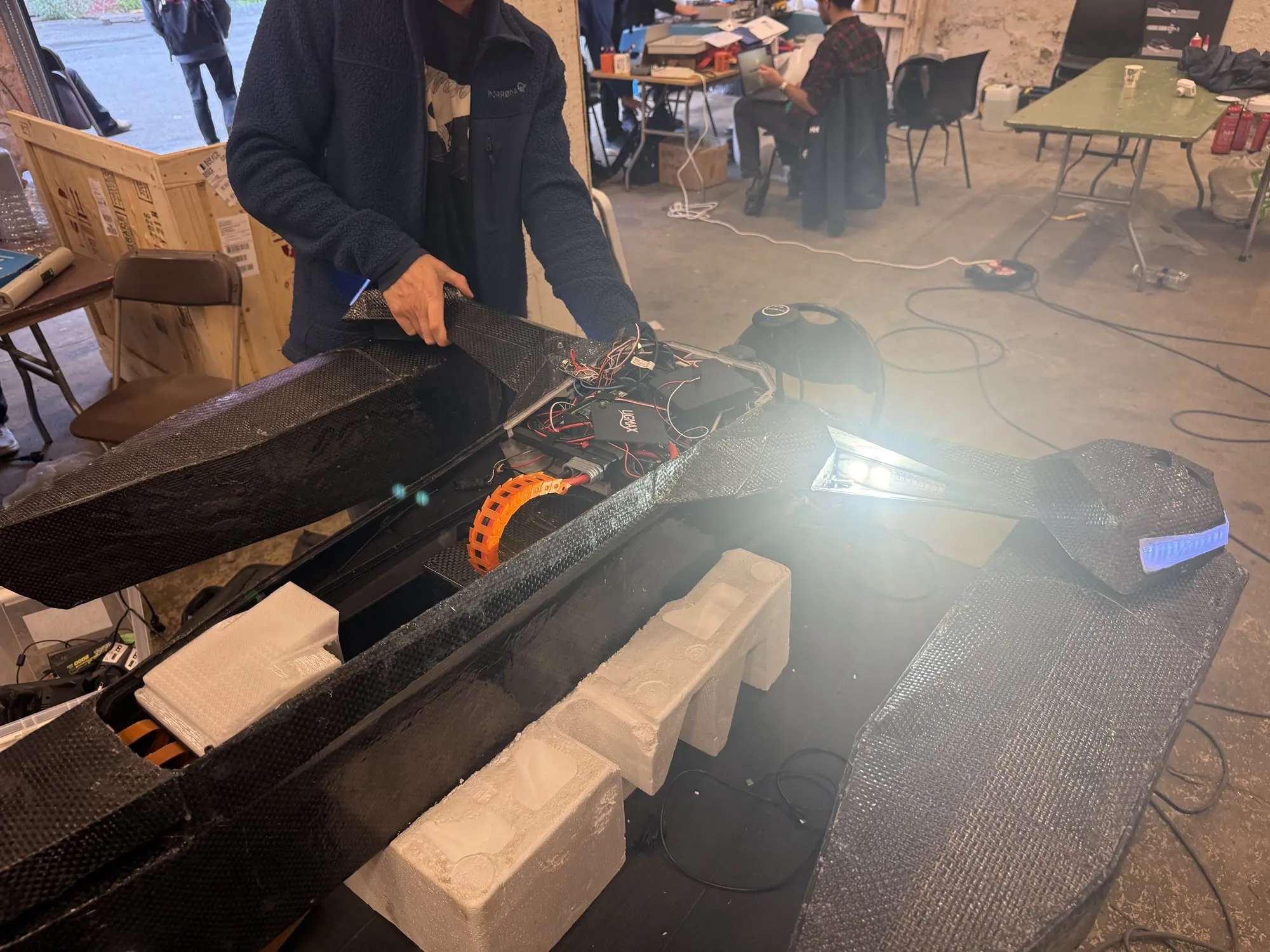
The forward-facing pop-up lights on the Ligmax hull opened and lit inside the workshop
The forward-facing lights popped open and lit. They survived the flooding.
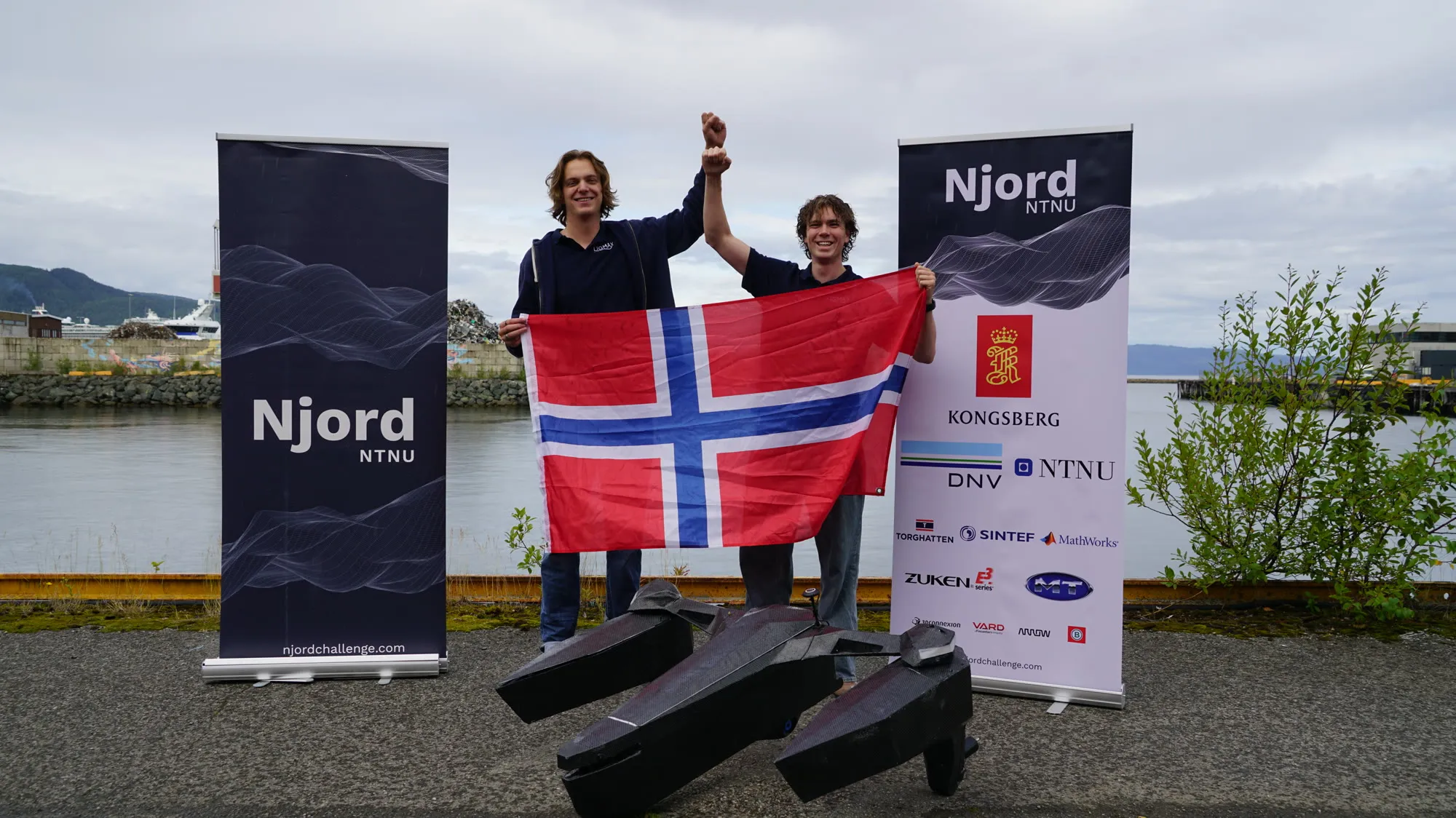
Two Ligmax team members holding a Norwegian flag behind the vessel at the Njord 2026 competition site
Ligmax and the boat at the Njord 2026 site in Trondheim.

What we take into next year

We came away knowing the tasks are within reach — we were never short on capability, we were short on hardware that survived the week. Waterproofing, connector choice and a recovery plan for a flooded boat are now the first things on the list rather than the last. We learned a great deal this year, and we are going back with high expectations.