
Built from parts, not kits
Every subsystem on Ligmax starts as raw material or a bare component. The hull is 3D-printed in sections and hand-laminated in carbon fibre; the 144-cell battery pack is welded in-house and enclosed in its own fireproof box; rails, belts, actuators, drivers and compute are wired and integrated by the team. This is the hardware it all starts from.
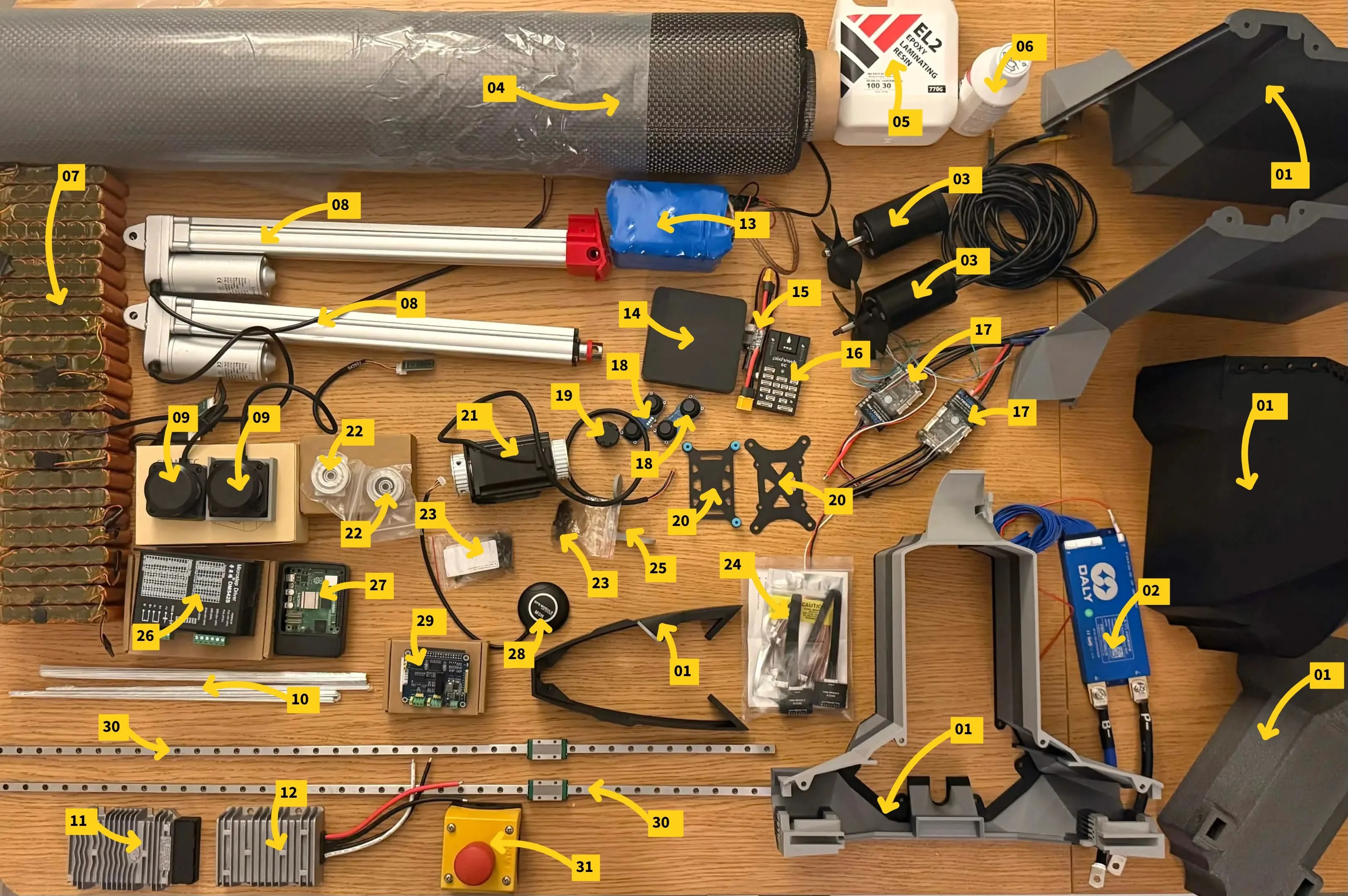
Component legend
- 01 PLA hull components
- 02 Battery management system (Daly 150 A)
- 03 Main thrusters (Flipsky 5085)
- 04 Carbon-fibre cloth
- 05 Epoxy resin
- 06 Epoxy hardener
- 07 Li-ion battery cells (Samsung 35E)
- 08 Linear actuators (roll trim)
- 09 Lidars (Slamtec RPLIDAR)
- 10 Aluminium TIG weld sticks
- 11 DC-DC buck converter, low voltage
- 12 DC-DC buck converter, high voltage
- 13 Battery for system testing
- 14 5G router
- 15 Pixhawk power distribution board
- 16 Holybro Pixhawk 6C (flight controller / IMU)
- 17 VESC 6.7 FOC motor controllers
- 18 Sonar
- 19 Lidar gimbal motor
- 20 IMU vibration-damping mounts
- 21 Dual-shaft Nema 23 with belt pulleys (battery shift)
- 22 Idle belt pulleys
- 23 Screws
- 24 Pixhawk cables and PWM breakout
- 25 Gimbal structural part
- 26 Stepper-motor driver
- 27 Raspberry Pi 5 (companion computer)
- 28 GPS antenna (u-blox M9)
- 29 CAN communication Pi 5 HAT
- 30 Linear rails (battery shift)
- 31 Emergency-stop button
Not pictured: stern thruster, 2040 aluminium profile beam, lid locking mechanism, lights, battery aluminium plate, and mounting hardware (belts, bolts, misc.).
The battery, three stages in
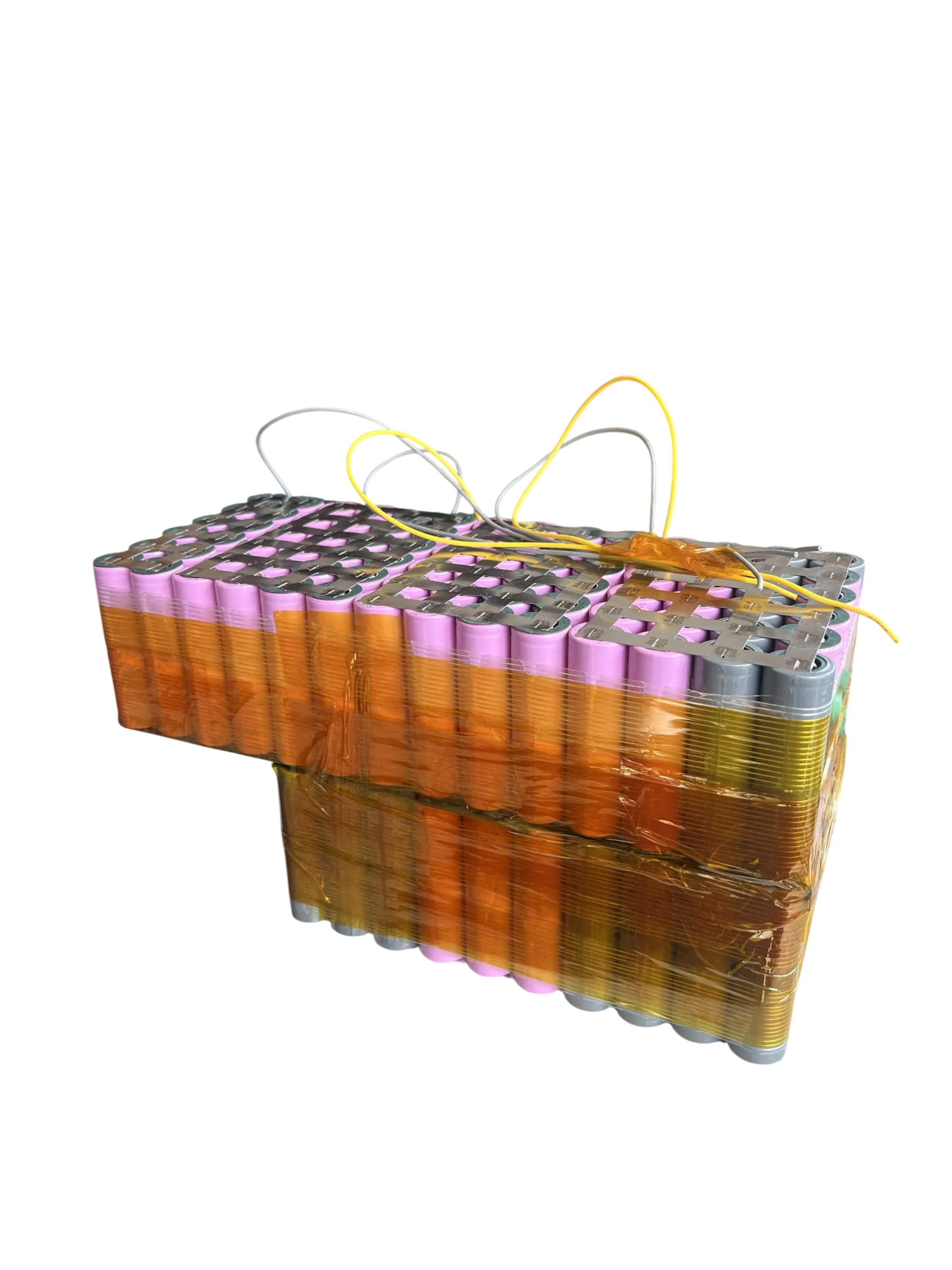
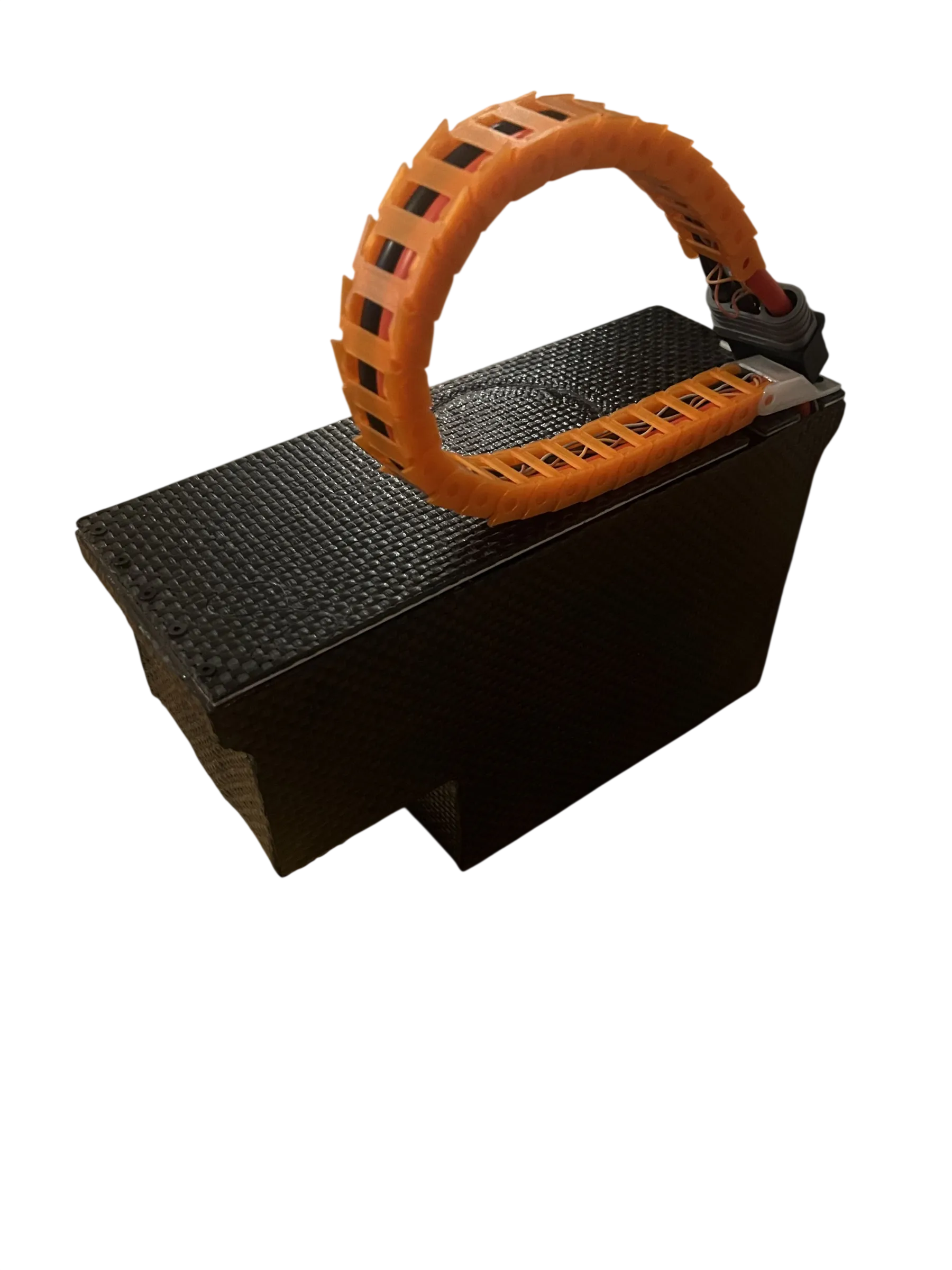
The pack is the heaviest thing on board and it is also the trim mass, so it gets built to move. Note the notch in its bottom front corner: it lets the battery run all the way forward with part of the pack sitting over the Nema motor that drives it, buying travel that a plain rectangular block would give up.
-
01 Cells and nickel
144 Samsung INR18650-35E cells in a 12S12P block, spot-welded in-house across nickel strips. The step cut out of the bottom front is deliberate.
-
02 BMS and leads
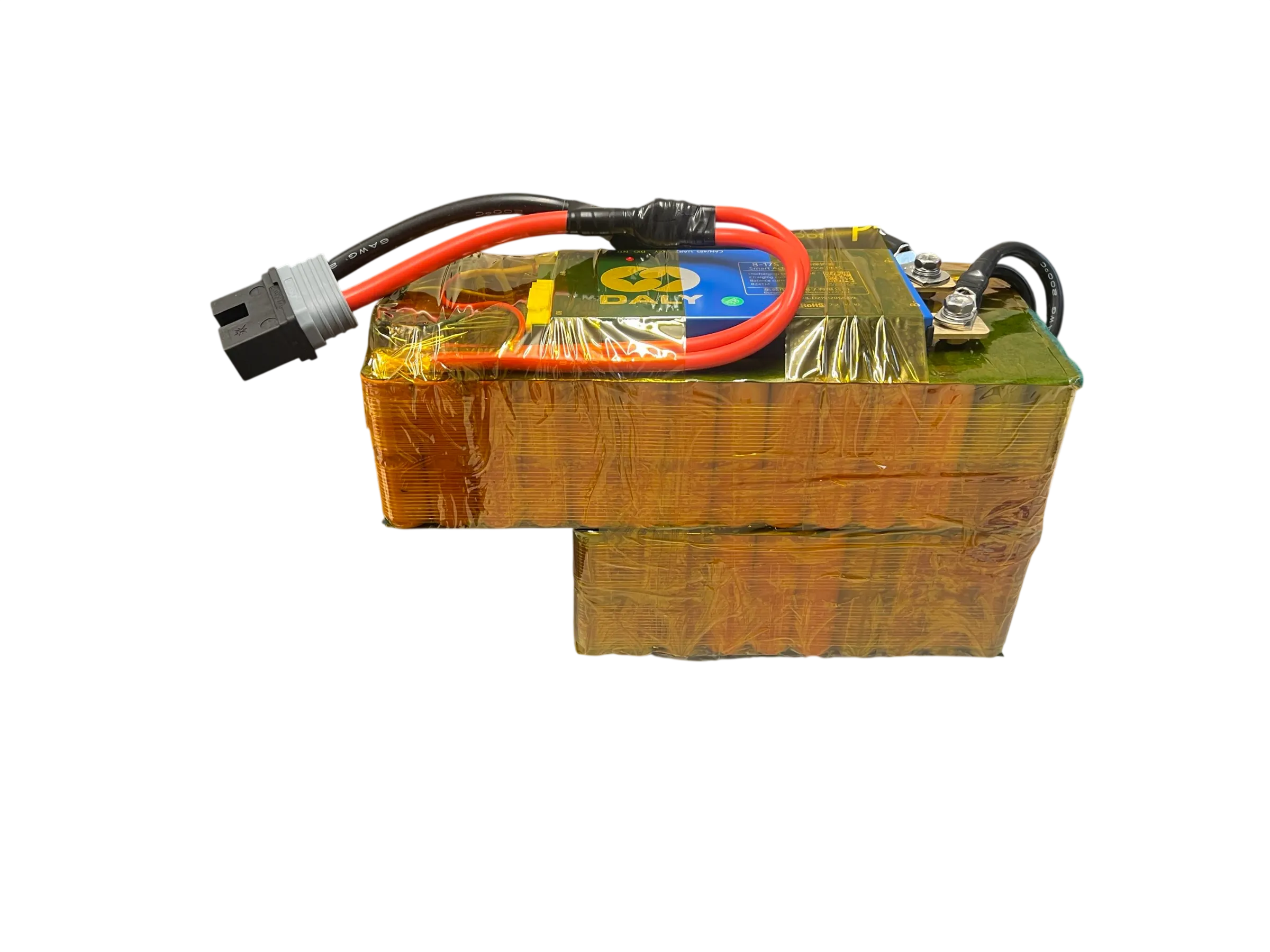
Wrapped, then fitted with a Daly BMS for per-cell telemetry and protection, plus the main leads and an Anderson connector for the propulsion bus.
-
03 Into its own box
Sealed into a fireproof enclosure that carries the same notch. The orange drag chain feeds power and BMS data along as the whole box slides fore and aft on its rails.
Want the full engineering detail? Hull geometry, power architecture, control loops and test results are all in the technical report.